
Canned tuna is often labeled as a “diet food,” but when people actually start tracking calories, confusion quickly appears. Some cans show 120 calories, others show over 200, even though they look almost identical. This is why can tuna fish calories is such a popular search query. People don’t just want a number — they want clarity. They want to know what they’re really eating, whether canned tuna fits their calorie goals, and how to avoid hidden mistakes that can sabotage a diet. This guide by Cannedfish Shop explains everything step by step.
Why “Can Tuna Fish Calories” Is So Confusing for Most People
Canned tuna looks simple — just fish in a can — but calorie confusion happens because nutrition labels don’t match how people actually eat it. Most consumers open the can and eat everything inside, while calorie labels are usually calculated based on drained tuna only.
The biggest source of confusion comes from the packing liquid. Tuna in water contains almost no added calories, while tuna in oil absorbs fat during storage. Even after draining, oil-packed tuna can contain significantly more calories, yet many people assume all canned tuna is nutritionally the same.
Another issue is serving size definitions. Labels often list calories per drained portion, not the full can. If the remaining oil or liquid is consumed, the real calorie intake is higher than expected.
Finally, tuna species also matter. Skipjack, yellowfin, and albacore have different fat levels, which explains why two cans of tuna in water can still show different calorie numbers. When these factors are ignored, people easily underestimate can tuna fish calories.

How Many Calories Are in a Can of Tuna Fish? A Realistic Answer
There is no single calorie number that applies to every can of tuna. In reality, can tuna fish calories usually range from 120 to over 250 calories per can, depending on how the tuna is packaged and consumed.
A standard can weighs about 5 ounces (140 g), but calorie labels almost always refer to the drained weight, not the entire contents.
In general:
-
Tuna packed in water contains 120–140 calories per drained can
-
Tuna packed in oil contains 180–250+ calories per drained can
This is why two cans that look nearly identical on the shelf can have very different calorie values. Understanding this range helps eliminate confusion and allows for more accurate calorie tracking.
The Role of Packing Liquid in Can Tuna Fish Calories
The type of liquid used to pack tuna plays a major role in determining can tuna fish calories, yet it’s one of the most commonly overlooked details by consumers. While the fish itself is naturally lean, the surrounding liquid can either preserve that low-calorie profile or significantly increase total energy intake.
Tuna Packed in Water
Tuna packed in water is the lowest-calorie option available because water adds no fat and no calories. Once the tuna is drained, what remains is almost entirely lean protein, with only trace amounts of natural fat from the fish itself.
This is why water-packed tuna is widely recommended for people who are actively tracking calories, trying to lose weight, or following high-protein, low-fat diets. A drained can typically contains around 120–140 calories, depending on the tuna species.
Most people searching for how many calories are in a can of tuna fish are usually thinking about tuna in water, which explains why many online answers consistently reference numbers close to 120 calories. However, this assumption only holds true when the tuna is fully drained and packed in water, not oil.
Tuna Packed in Oil
Oil-packed tuna behaves very differently. During storage, the fish absorbs part of the oil, which increases its fat content and raises the calorie count. Even after draining, a noticeable amount of oil remains trapped in the tuna flesh.
Vegetable oil adds calories without providing much nutritional benefit, while olive oil contributes healthier fats but still significantly increases total calories. As a result, can tuna fish calories for oil-packed varieties often range from 180 to over 250 calories per can, even when drained.
This is where many calorie-tracking errors occur. People often assume that draining removes all extra fat, but in reality, it only removes the excess oil — not the oil that has already been absorbed by the fish.
Drained Weight vs Total Can Weight: A Major Source of Error
Another major reason for calorie confusion lies in how serving sizes are defined on nutrition labels. Most canned tuna labels list calories based on drained tuna only, not the total contents of the can.
If you eat the remaining liquid, don’t drain thoroughly, or use the oil in cooking, your actual calorie intake will be higher than what’s listed. For oil-packed tuna, this can mean an additional 40 to 100 calories, depending on how much oil is consumed.
This detail is especially important for people who eat tuna straight from the can or add it directly to salads, pasta, or rice without draining. Understanding the difference between drained weight and total can weight is essential for accurately tracking can tuna fish calories.

Does the Type of Tuna Affect Calories?
Yes — while the impact is smaller than the packing liquid, the type of tuna still plays an important role in determining can tuna fish calories. Different tuna species have naturally different fat levels, which directly affects calorie content, even when they are packed in the same way.
This is why two cans of tuna in water can look identical on the shelf yet display different calorie numbers on the nutrition label.
Skipjack Tuna
Skipjack is the most commonly used species in canned tuna products, especially those marketed as low-calorie or diet-friendly. It is naturally lean, with lower fat content than other tuna varieties.
Because of this, skipjack tuna typically results in fewer calories per can, particularly when packed in water. This is why most “light tuna” or calorie-conscious canned tuna products rely on skipjack as their primary ingredient.
For people tracking calories closely, skipjack-based tuna is often the most predictable and reliable option.
Yellowfin Tuna
Yellowfin tuna contains slightly more fat than skipjack, which leads to a modest increase in calories. While the difference isn’t dramatic, it is noticeable enough to appear on nutrition labels.
Many consumers prefer yellowfin for its firmer texture and richer flavor, even if it comes with a slightly higher calorie count. For most people, the trade-off between taste and calories is minimal, especially when yellowfin is packed in water.
Albacore Tuna (White Tuna)
Albacore has the highest fat content among the commonly canned tuna species. As a result, can tuna fish calories for albacore are consistently higher than for skipjack or yellowfin.
Even when packed in water and fully drained, albacore tuna usually contains more calories due to its naturally higher fat levels. This explains why two water-packed cans can show different calorie values despite having no added oil.
For calorie tracking, albacore isn’t necessarily a bad choice — it’s simply more energy-dense and should be selected intentionally.
Can Tuna Fish Calories Compared to Protein Content
One of the main reasons canned tuna is so widely recommended is its exceptional protein-to-calorie ratio. Despite differences in species and packing liquid, tuna remains one of the most efficient protein sources available.
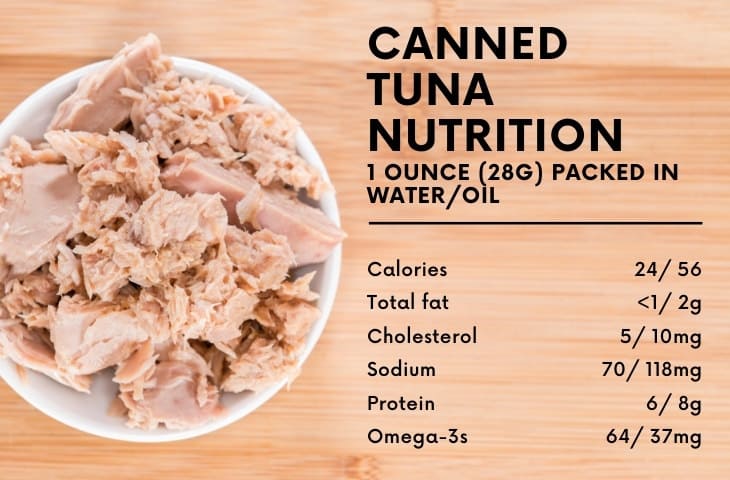
A typical can of water-packed tuna provides around 25–30 grams of protein while containing only 120–140 calories, with zero carbohydrates and no sugar.
This balance makes canned tuna especially effective for managing hunger, preserving muscle mass, and supporting fat loss. Very few foods deliver this amount of protein with such a low calorie cost, which is why can tuna fish calories are often described as “high value” from a nutritional standpoint.
Is Canned Tuna Actually Good for Weight Loss?
Canned tuna can be an excellent food for weight loss — but only when it’s used in the right context. On its own, tuna is naturally low in calories, high in protein, and very filling. This combination helps reduce hunger and makes it easier to stay within a calorie deficit.
When eaten plain or paired with low-calorie ingredients such as vegetables, lemon juice, vinegar, or mustard, tuna supports appetite control without adding unnecessary energy. This is why tuna often appears in diet plans and calorie-controlled meal prep.
However, tuna frequently becomes calorie-dense not because of the fish itself, but because of how it’s prepared. Adding mayonnaise, creamy dressings, pasta, bread, or cheese can easily double or even triple the total calories of a tuna-based meal. In most stalled weight-loss cases, tuna isn’t the problem — the preparation method is.
Hidden Calories: How Tuna Meals Add Up Quickly
A plain can of tuna in water typically contains around 130 calories, which sounds ideal for dieting. But real-life meals rarely stop there.
Adding just one tablespoon of mayonnaise can push the meal to over 220 calories. Combine tuna with bread, pasta, or rice, and the total can quickly reach 400–600 calories or more. At that point, the meal no longer reflects the low-calorie reputation tuna is known for.
This is why understanding can tuna fish calories on their own is important — but understanding how tuna is used in meals is even more critical for accurate calorie control.
Sodium, Satiety, and Calorie Perception
Sodium doesn’t add calories, but it can affect how people feel after eating tuna. High-sodium canned tuna may cause water retention and bloating, which can make people believe they’ve eaten more calories than they actually have.
This false perception can lead to unnecessary restriction or frustration. Choosing low-sodium tuna not only supports better health, but also improves satiety awareness and portion control, especially for people actively tracking intake.
Is Oil-Packed Tuna Ever a Better Choice?
Despite its higher calorie content, oil-packed tuna isn’t always a bad option. For certain dietary goals, it can actually be beneficial.
People following ketogenic diets, high-fat eating patterns, or calorie-surplus muscle-building plans may prefer oil-packed tuna for its higher energy density and richer texture. Olive oil–packed tuna, in particular, provides healthy fats that may support satiety and flavor satisfaction.
The key point is intention. Oil-packed tuna isn’t “bad” — but it should be chosen deliberately, not by accident, especially when calories matter.
Common Myths About Can Tuna Fish Calories
One common myth is that all canned tuna is low in calories. In reality, oil-packed varieties can be surprisingly calorie-dense.
Another misconception is that draining tuna removes all extra calories. While draining reduces excess liquid, oil absorbed into the fish remains, meaning calorie counts can still be significantly higher than expected.
Understanding these myths helps prevent long-term calorie tracking errors and improves dietary consistency.
Final Verdict: Can Tuna Fish Calories Explained Clearly
So, how many calories are in a can of tuna fish?
The most accurate answer is:
-
120–140 calories for drained tuna packed in water
-
180–250+ calories for drained tuna packed in oil
Canned tuna remains one of the most efficient protein sources available, but only when consumers understand nutrition labels, packing liquids, and preparation methods.
When used correctly, can tuna fish calories fit easily into a wide range of dietary goals — from weight loss and muscle maintenance to balanced, everyday eating.