In an era defined by food security concerns and the rapid rise of convenience-driven nutrition, the canned fish processing factory has evolved from a simple assembly line into a high-tech hub of bio-science and industrial automation. For global retailers and private label brands, the factory is the most critical link in the supply chain. It is where raw, highly perishable aquatic proteins are transformed into shelf-stable, nutrient-dense products that can withstand years of storage and thousands of miles of transit. To compete in markets like the USA, EU, or Japan, a processing factory must go beyond basic compliance. It must master the delicate balance between thermal precision, chemical safety, and ethical sourcing. Let’s find out more with Cannedfish.shop!
1. The Anatomy of a World-Class Processing Infrastructure
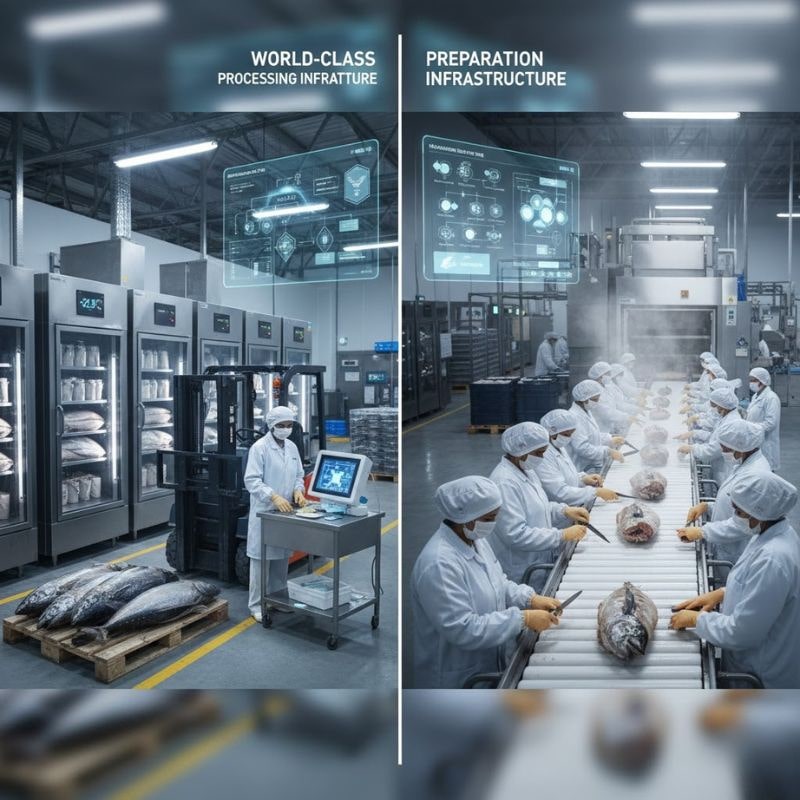
A modern canned fish processing factory is divided into strictly controlled zones to prevent cross-contamination and ensure maximum efficiency. Each zone is governed by Good Manufacturing Practices (GMP) and Standard Operating Procedures (SSOP).
Raw Material Reception and Cold Chain Integrity
The journey begins at the receiving dock. A world-class factory must be located near major fishing ports to minimize the time between catch and processing.
- Deep-Freeze Storage: Raw fish is typically stored at -18°C to -25°C.
- Histamine Monitoring: For species like tuna and mackerel, the factory lab must perform rapid tests for histamine levels. Elevated histamine is a sign of temperature abuse and is a major “red flag” for FDA and EU inspectors.
The Preparation Zone: Pre-cooking and Cleaning
Before canning, the fish undergoes a series of preparations.
- Pre-cooking: Fish are steamed to firm the meat and facilitate the removal of skin and bones.
- Manual vs. Automated Cleaning: While automation is rising, the “cleaning” phase—removing the red meat (bloodline), skin, and bones—is often still done by skilled workers to ensure a “Solid Pack” or “Chunk” grade that machines cannot yet perfectly replicate.
2. Advanced Canning and Liquid Medium Integration
The filling station is where the factory’s mechanical precision is most visible. This stage determines the product’s flavor profile and economic value.
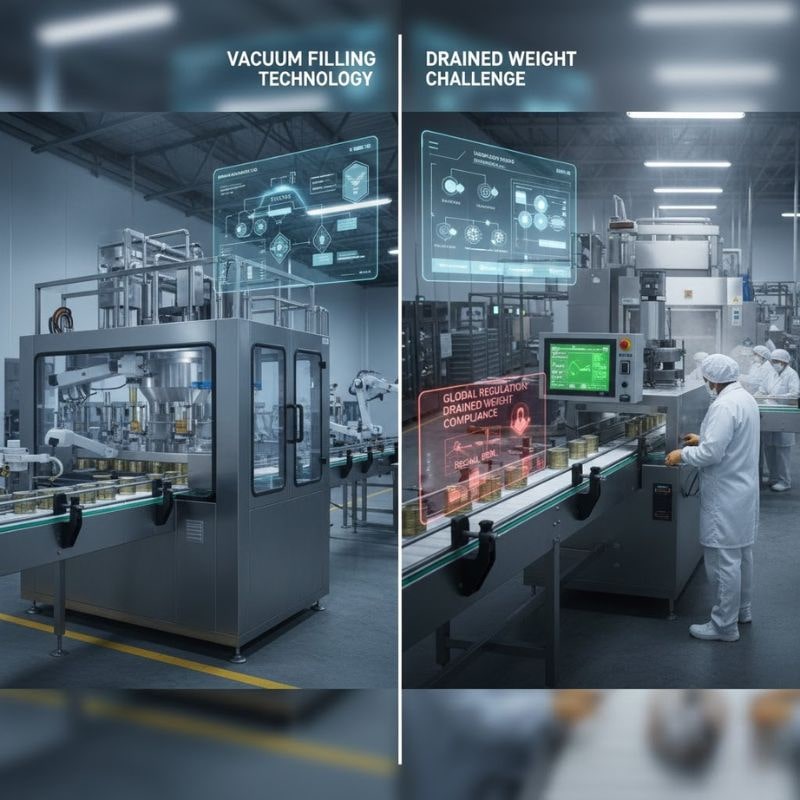
Vacuum Filling Technology
Modern factories use vacuum fillers to inject the liquid medium—whether it be brine, refined sunflower oil, extra virgin olive oil, or gourmet sauces. Vacuum filling ensures that air pockets are eliminated, which is crucial for preventing oxidation and ensuring heat penetration during the later sterilization stage.
The “Drained Weight” Challenge
Global regulations are incredibly strict regarding drained weight. A professional canned fish processing factory uses high-speed check-weighers to ensure that every can contains the exact ratio of fish-to-liquid promised on the label. Falling below the declared weight can lead to massive recalls and legal penalties in international markets.
3. The Science of Sterilization: The Retort Room
If the preparation zone is the “heart” of the factory, the Retort Room is its “brain.” This is where the product achieves Commercial Sterility.
Thermal Process Validation
Canned fish is a “low-acid food,” meaning it is at high risk for Clostridium botulinum if not processed correctly.
- Batch Retorts: Large pressurized vessels cook the cans at temperatures typically ranging from 116°C to 121°C.
- Overpressure Cooling: After sterilization, the cans must be cooled rapidly. If the pressure inside the retort drops too fast, the cans will “peak” (deform). Modern factories use sophisticated PLC-controlled systems to manage the pressure-temperature curve with surgical accuracy.
4. Quality Control: The Laboratory and Certification Suite
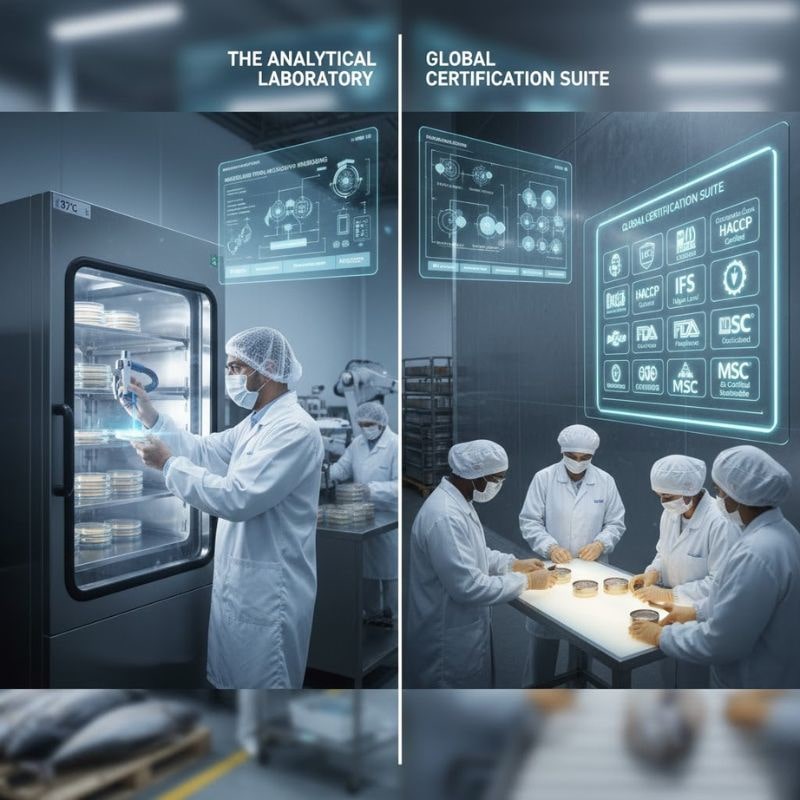
A reputable canned fish processing factory operates an on-site laboratory that functions 24/7. Quality control is not an end-of-line check; it is a continuous loop.
Essential Lab Tests
- Incubation Testing: Random samples from every batch are incubated at 37°C and 55°C for 7 to 14 days to check for any sign of microbial activity or gas production.
- Seam Analysis: The “double seam” that seals the lid to the body is measured using digital micrometers. A deviation of even 0.01mm can compromise the entire batch.
- Sensory Evaluation: Professional tasters evaluate the texture, color, and odor to ensure the product meets the brand’s organoleptic standards.
Global Certification Standards
To export globally, the factory must be a fortress of compliance. Key certifications include:
- HACCP: The foundation of seafood safety.
- BRCGS / IFS: Essential for European retail giants like Tesco, Aldi, or Carrefour.
- FDA FCE/SID: Mandatory for entering the United States market.
- MSC/ASC: Proving the fish was sourced from sustainable, well-managed fisheries.
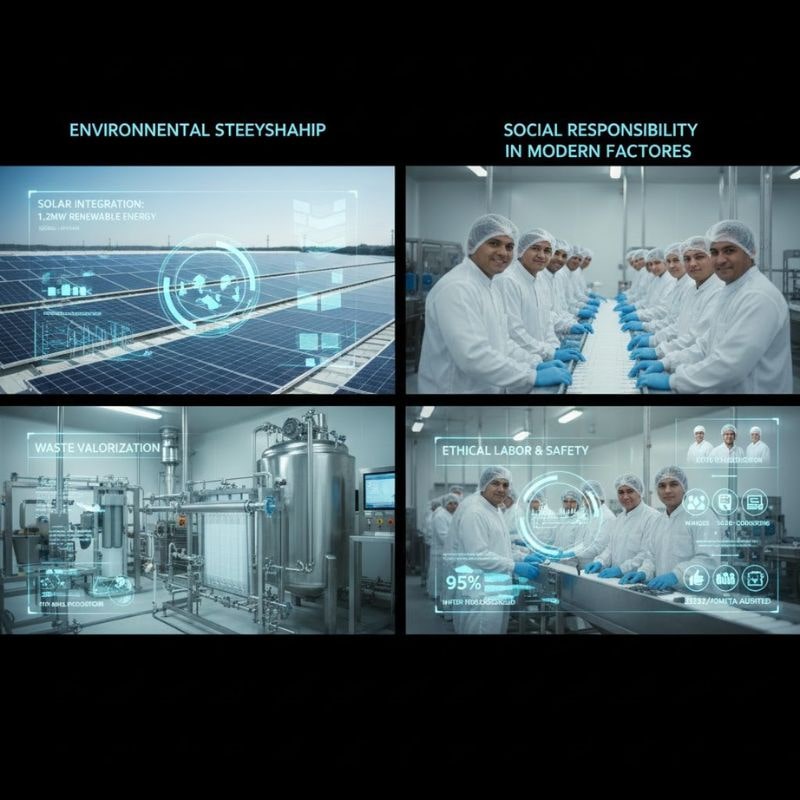
5. Sustainability and Social Responsibility in Modern Factories
The definition of a “good” factory has expanded to include ESG (Environmental, Social, and Governance) criteria. Leading canned fish processing factories are now investing in:
- Waste Valorization: Transforming fish guts and bones into high-value fish meal or fish oil for the aquaculture and pharmaceutical industries.
- Water Treatment: Advanced filtration systems to treat and recycle the massive amounts of water used in the cleaning and cooling processes.
- Solar Integration: Using rooftop solar panels to power the intensive cold storage requirements.
- Ethical Labor: Rigorous social audits (like Sedex/SMETA) to ensure fair wages and safe working conditions for the hundreds of workers involved in the cleaning process.
6. Frequently Asked Questions (FAQ)
How do I choose the right canned fish processing factory for my brand?
Look for three things: a proven track record of exporting to your target market, a robust list of third-party certifications (BRCGS/FDA), and a transparent traceability system that can track a can back to the vessel.
What is the typical lead time from order to shipment?
For a new private label project, expect 8-12 weeks. This includes R&D for the sauce, label design approval, and the mandatory 14-day incubation period for the first production run.
Can a factory handle small-batch “Craft” canned fish?
Most large-scale factories require a Minimum Order Quantity (MOQ) of at least one 20ft container. However, some specialized factories offer smaller pilot lines for premium, gourmet formulations.
Why is tuna often more expensive to process than sardines?
Tuna requires more intensive labor for “loining” (removing the dark meat and bones) and higher energy for pre-cooking due to the size and density of the fish compared to small pelagics like sardines or mackerel.
7. Conclusion: The Future of Canned Seafood Manufacturing
The canned fish processing factory of the future will be defined by Traceability and Transparency. As consumers demand to know exactly where their food comes from, factories are adopting blockchain technology to provide “vessel-to-can” data at the scan of a QR code.
For brands looking to dominate the shelf, the choice of factory is a choice of legacy. Partnering with an facility that combines 15+ years of industry know-how with state-of-the-art retort technology is the only way to ensure that your product is not just a commodity, but a global gold standard in nutrition and safety.
Read more:
- OEM Canned Fish Production: The Definitive Strategic Guide for Global Seafood Brands
- Canned Fish Manufacturing Factory: The Technical Blueprint for Global Safety and Scalability
- Canned Fish Packaging Design Service: What Really Makes a Label Work
- Expert Guide: Large-Scale Canned Fish Manufacturing Factory
- Custom Canned Fish Production and Packaging Design: An Integrated OEM & Branding Approach
- Large-Scale Canned Fish Production and Supply: A Comprehensive Guide for Global Buyers
- Canned Fish Production and Processing Support Service for Global Brands
- The Strategic Guide to Canned Fish Packaging Services: Navigating Global Private Label Standards